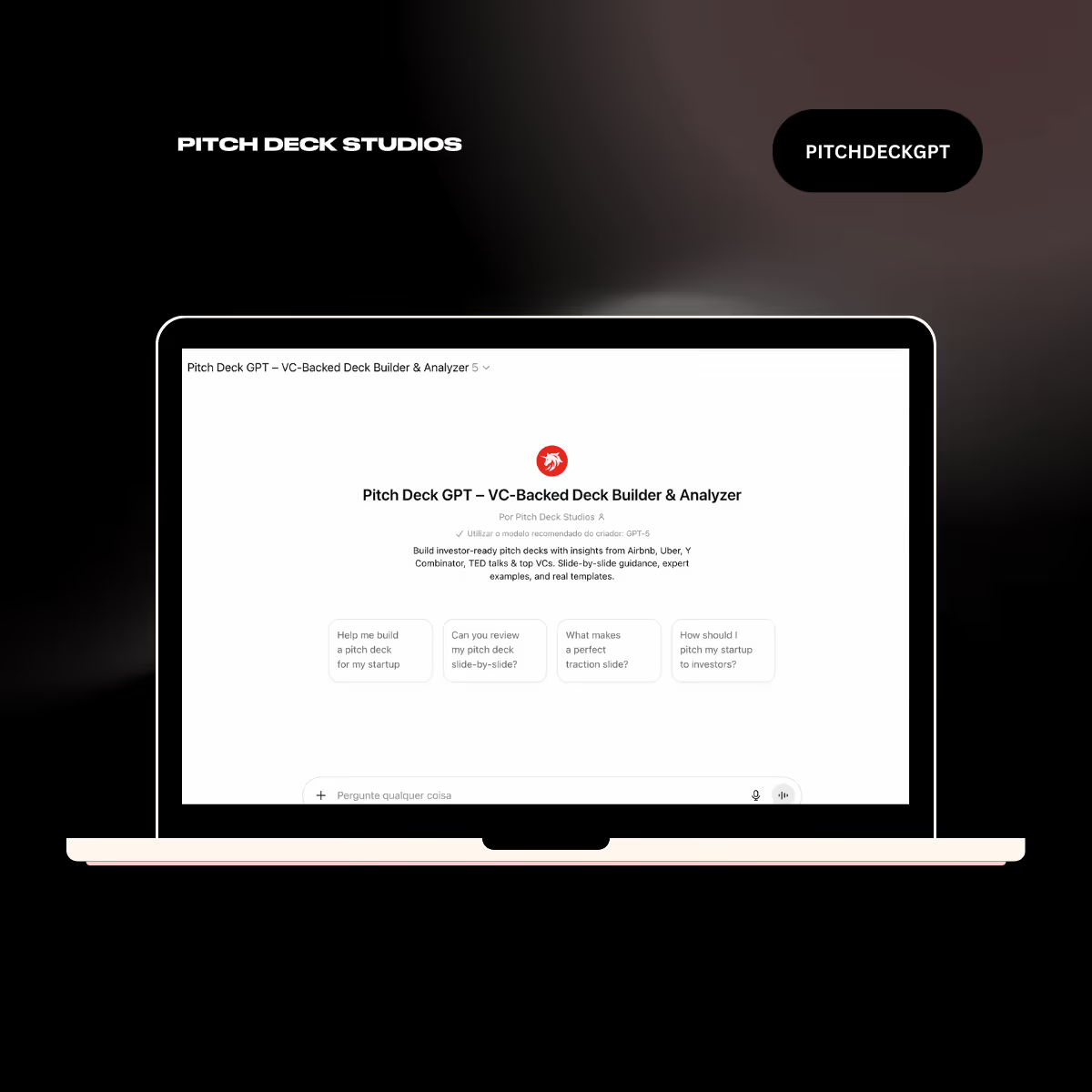
Pitch Deck GPT is a free AI system that transforms how founders create investor-ready pitch decks. Built on investor-grade frameworks from analyzing 4,000+ real presentations, it works with regular ChatGPT (even the free version) to guide you through building a master deck and tailoring it for any situation – whether you need a 5-slide teaser, a 15-slide live pitch, or a detailed leave-behind deck.
Format (teaser, live pitch, leave‑behind, accelerator)
What the GPT does: Locks onto investor intent and selects the correct Slide Map (teaser vs. live vs. leave‑behind), so you’re not trying to sell a data‑room deck in a first email.
2) Choose your mode
A. Build from scratch
You’ll get a guided, 12‑slide investor flow (Problem → Solution → Product → Market → Business Model → Go‑to‑Market → Traction → Competition → Team → Financials → Ask → Why Now).
The model proposes slide titles that answer VC questions in plain investor language.
For each slide it offers 2–3 angle options (e.g., “pain/timing,” “regulatory tailwind,” “workflow inefficiency”), so you pick the most credible story.
B. Improve an existing deck
Drop in slide text (or paste speaker notes). The model runs a VC‑style review:
Timing: Is “why now” explicit (tech/regulatory/behavioral shift)?
Scale: Is market credible and the wedge specific?
Edge: Is your defensibility concrete (data, workflow lock‑in, network)?
Proof: Do metrics show momentum and efficiency?
Ask: Clear amount, milestones, and runway math?
Pass this, and your deck reads like an investor wrote it.
Why founders like this workflow
Pitch Deck GPT blends visual storytelling with investor‑grade numbers. It’s the same philosophy Pitch Deck Studios uses to keep decks from becoming “pretty but empty.” They’ve created 6,000+ decks for 4,000+ companies, contributing to $500M+ raised — and the workflow adapts across formats (teaser, live pitch, leave‑behind, data room, incubator).
Pitch Deck Studios vs. AI: What $1.6B in Raised Capital Taught Us
After reviewing thousands of investor decks and watching clients raise more than $1.6B, we've learned the decks that win aren't the prettiest ones. Here's what AI can and can't do about that.
Real Estate Pitch Deck
Investor Pitch Deck
July 23, 2026
Real Estate Documents: What They Are
Real estate documents do more than close deals, they set the first impression. See what they include, why they matter, and how stronger design helps you sell the vision, not just the property.
Investor Pitch Deck
Startup Pitch Deck
AI Pitch Decks Are Everywhere. But Investors Still Want Human Judgment.
AI can generate a polished pitch deck in minutes, but investors are judging the strategic thinking behind it, not just the slides. Here's why human judgment remains the real differentiator in fundraising.
Contact us
Thank you! Your submission has been received!
Oops! Something went wrong while submitting the form.

.svg)

.svg)




.avif)



.svg)
